By Matt Sandoval | Thoughts on Innovation
Outside my formal role leading a nonprofit, I continue to work as a therapist — a passion project, honestly, and the mode I keep returning to and honing is attachment-based relationship counseling.
Nobody comes to couples therapy because things are going well. There is almost always something significant at stake, and deep-seated emotions tend to be running the show before anyone walks through the door.
In the therapist’s seat, you learn to scan for patterns. You also learn to notice shifts. One of the most telling shifts I watch for is when a couple who began sessions unable to hold each other’s gaze — guarded, defended, tracking threat — reaches toward each other. Sometimes it’s a touch. Sometimes it’s humor. And sometimes, in a session where real hurt has also been part of the script, something happens that is almost startling: they laugh. Together. Spontaneously.
I’ve come to believe that moment is one of the most important things I ever get to witness.
Think about what laughter actually requires. There is joy in it, and pleasure, and recognition, and relief — all arriving at once. And notice what we do when we laugh in a group: we look for the people we trust most. We make eye contact. We check to see if they are in it with us. That instinct isn’t incidental. Laughter is the product of two nervous systems that have achieved enough safety that a shared delightful moment becomes possible. You cannot manufacture that. You can only create the conditions for it.
This is what we mean by co-regulation — but I think it’s bigger than the clinical term suggests. To share laughter with someone is to share safety. And sharing that kind of safety requires attunement, patience, and showing up consistently, especially during the stretches when the jokes feel very far away.
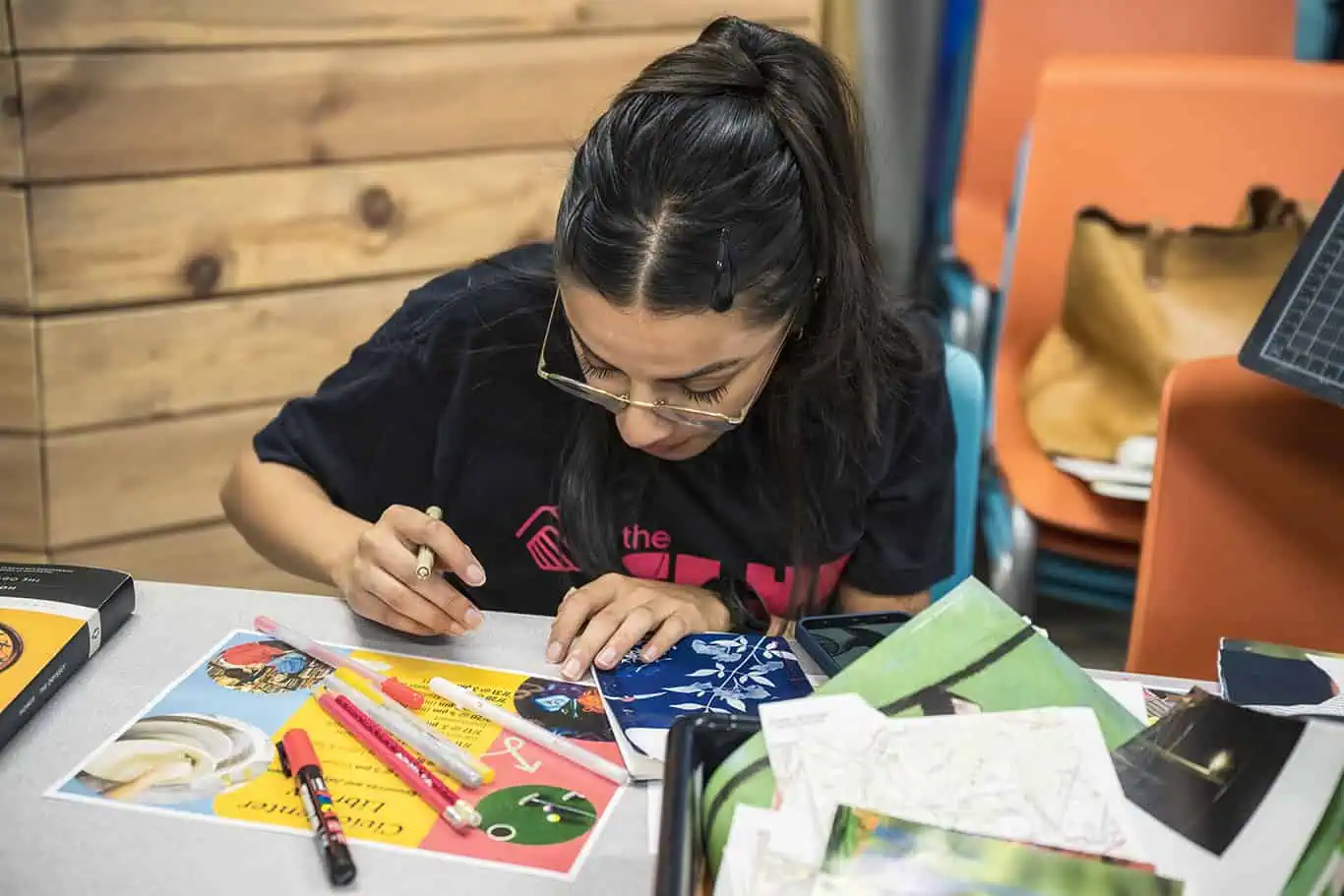
I see the same thing happen when kids make things together. The process of creating can be chaotic, uncertain, and genuinely funny in its own way. But the moment of laughter that occurs becomes the permission for real engagement. Art lowers the stakes just enough that a child who has learned to scan every room for danger can briefly forget to. And when a mentor or artist is steady in that space, something begins to shift. The nervous system takes note, which sounds like “maybe this is safe,” or “maybe I can trust this.”
We would be wise not to chase the laughter. Not to perform it or prompt it or treat it as the destination. The work is building the container for the relationship — showing up, staying steady, letting everyone in the room gradually discover that their perception of threat can decrease here. That safety is possible here.
The laughter is the chime on the oven. It tells you the meal is done. You didn’t cook by ringing it. You cooked by doing everything that came before.
And then, eventually, someone laughs. And someone else looks over.
That’s not only an artistic outcome, it’s also a safe, attuned relationship forming. That’s the whole point. And laughter is the soundtrack.
Editor’s Note: Matt Sandoval is the CEO of Art Heals Arizona, a Phoenix- and Tucson-based nonprofit serving youth who have experienced trauma through arts-based mentorship programming.