Staff Reports | Community Updates
For individuals with autism and other forms of neurodivergence, loud noises, flashing lights, unfamiliar faces and disruptions to routine can turn emergency situations into overwhelming experiences. Members of the Scottsdale Firefighters Association are working to improve how those moments are handled through specialized training aimed at increasing awareness and communication during emergency responses.
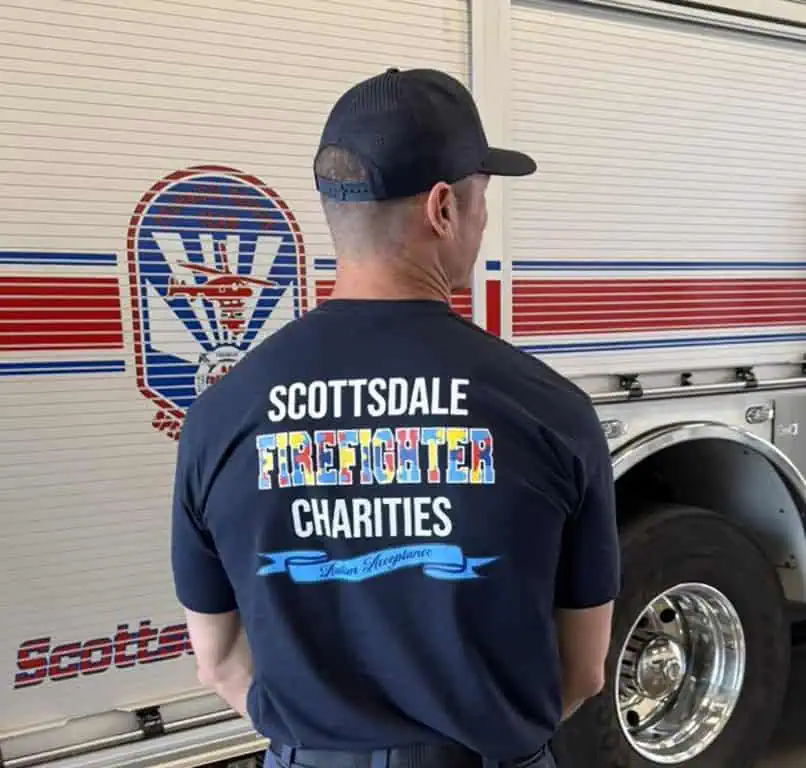
Throughout April, which is recognized nationally as Autism Acceptance Month, 100 percent of proceeds from sales of a Scottsdale Firefighters Association specialty T‑shirt will help fund autism‑focused training for city firefighters, according to a press release.
The training is designed to help first responders manage emergency calls involving neurodivergent individuals by emphasizing communication strategies and approaches intended to reduce stress and confusion during high‑intensity situations.
“We want to make sure that when we encounter people with autism, we treat them in a way that makes the atmosphere feel as safe as possible,” said Association President Sasha Weller. “It’s really about making that person feel comfortable when dealing with the EMS system and understanding how to bring calm to their world during what can be a highly stressful time.”
The Scottsdale Firefighters Association represents more than 400 firefighters across the city. Proceeds from the shirts, which are priced at $30 and available by emailing info@scottsdalefirefighters.com, support training focused on understanding sensory sensitivities, communication differences and the impact of sudden environmental changes on individuals with autism and other neurodivergent conditions.
Members of the association are also wearing the shirts throughout the month in public settings to help raise awareness and encourage broader acceptance within the Scottsdale community.
Some individuals with neurodivergent conditions experience heightened sensitivity to sound, touch or changes in routine, which can make it more difficult to process instructions or unfamiliar surroundings during emergencies. Firefighters involved in the training effort say small adjustments in tone, pacing or approach can significantly affect the outcome of these interactions.
Mr. Weller noted that while Scottsdale firefighters already approach emergency calls with care, specialized training focused on neurodivergence can strengthen and standardize responses. The effort also resonates personally with some firefighters, including those who have children on the autism spectrum.
“We’ve been part of this community for a long time,” Mr. Weller said. “If there’s an opportunity to use our platform to bring more awareness to the neurodivergent community, we’re going to take it.”