Sponsored Content | Digital Free Press
When homeowners think about shading their patios or protecting outdoor seating from the desert sun, they may invest in features like Venango Awning to enhance comfort and curb appeal.
But the larger question for Phoenix’s future is how neighborhoods themselves are designed, whether streets, building patterns, and transit access are oriented toward people rather than cars. Walkable, mixed-use, transit-oriented neighborhoods (TONs) offer a promising path away from sprawl: reducing traffic, lowering infrastructure costs, improving public health, and increasing quality of life.
What Is Transit-Oriented Development & Why It Matters
Transit-Oriented Development (TOD) refers to urban design that places housing, businesses, amenities, and services within easy reach of public transit. Typically this means higher density around transit nodes, walkable street networks, mixed land use, and infrastructure that supports biking and walking.
For fast-growing regions like Phoenix, now the fifth-largest city in the United States and part of a metro area that continues to add more than 80,000 residents annually, TOD is more than a design trend. It’s a tool to balance growth with sustainability. Without changes in how development occurs, the Valley risks deepening traffic congestion, worsening air quality, and overextending already stressed water and infrastructure systems.
The City of Phoenix has embraced TOD through its Transit Oriented Communities (TOC) Strategic Policy Framework, which provides a roadmap for sustainable development around transit nodes and corridors. Initiatives like ReinventPHX reflect this shift in thinking, tying land use to mobility and long-term livability.
The Hidden Costs of Sprawl in the Phoenix Metro Area
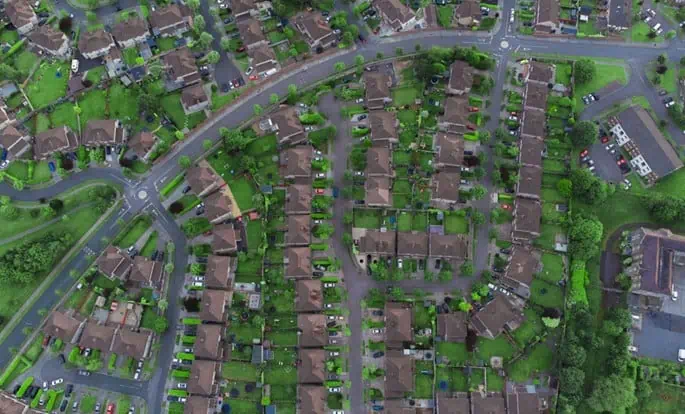
Sprawl has long defined development in Arizona. Subdivisions stretching across the Sonoran Desert deliver large homes and low initial costs, but the hidden long-term expenses are significant:
- Transportation burdens: Residents in sprawling suburbs may spend hours in traffic daily. Vehicle reliance contributes to greenhouse gas emissions, poor air quality, and higher household transportation costs.
- Infrastructure inefficiencies: Extending sewer, water, electricity, and roads to far-flung developments costs municipalities far more per household compared to compact, infill development.
- Environmental stress: Replacing desert ecosystems with pavement intensifies the heat island effect and increases stormwater runoff. At the same time, fragmented open space disrupts wildlife habitats.
- Social costs: Sprawl limits walkability, reducing opportunities for spontaneous social interaction. Public health suffers when walking and biking are unsafe or impractical.
In short, while sprawl may seem like “affordable housing,” it often shifts hidden costs to taxpayers, the environment, and future generations.
Elements & Benefits of Walkable Mixed-Use Communities
Transit-Oriented Neighborhoods are designed with people, not cars, in mind. They provide multiple benefits that resonate with both residents and cities:
| Feature | Benefit |
| Higher density & mixed-use zoning | Allows housing, retail, and workplaces to be clustered, creating vibrant neighborhoods where people can meet daily needs without long commutes. |
| Pedestrian-oriented street design | Wide sidewalks, shaded paths, and safe crossings make walking viable in Arizona’s climate. Small design features like arcades, shade trees, and awnings encourage outdoor life. |
| Transit proximity | Homes and businesses located within a short walk of light rail or bus rapid transit stops reduce reliance on cars and open opportunities for those without vehicles. |
| Multimodal options | Safe bike lanes, micro-mobility hubs, and well-connected pedestrian networks provide alternatives to single-occupancy driving. |
| Public and green spaces | Integrated parks, plazas, and greenways enhance community health, provide relief from heat, and foster social interaction. |
These features together can transform car-dominated streets into places where people live, gather, and thrive.
Local Examples in Phoenix & Tempe
The Phoenix metro area has begun experimenting with TOD principles, showing what the future might hold:
- Culdesac Tempe: This 17-acre, car-free neighborhood integrates apartments, retail, and community amenities around transit connections. Residents receive mobility perks such as light rail passes and ride-share credits instead of parking spots.
- Phoenix Transit Oriented Communities Policy Plans: Uptown, Midtown, and Eastlake-Garfield are among areas where Phoenix is actively guiding mixed-use infill and walkable design to align with light rail investments.
- CityScape Phoenix: Downtown, CityScape combines office, residential, hotel, and retail in a dense core that leverages transit access, showing how TOD can anchor urban vitality.
These examples, while not yet the norm, demonstrate how TOD principles can reshape Valley neighborhoods.
National and federal agencies reinforce TOD’s value. The U.S. Environmental Protection Agency (EPA) provides resources on smart growth, highlighting how TOD reduces pollution, preserves open space, and creates healthier communities.
Similarly, organizations like the Urban Land Institute and HUD have published case studies demonstrating how TOD improves affordability, resilience, and long-term municipal finances. These external authorities validate Phoenix’s steps while pointing toward best practices.
Barriers to Broader Adoption
Despite these benefits, TOD faces hurdles in Phoenix:
- Zoning inertia: Many neighborhoods are locked into single-use, low-density zoning, making it difficult to introduce mixed-use or multifamily housing.
- Market expectations: Many homebuyers still value large lots and car-centric living, which shapes developer choices.
- Transit limitations: While light rail and buses serve parts of Phoenix, gaps in frequency, reach, and last-mile connectivity limit TOD’s appeal.
- Affordability risks: Walkable, transit-oriented neighborhoods are highly desirable and can quickly gentrify, pushing out lower-income residents if affordable housing isn’t built in.
- Climate challenges: Arizona heat requires additional design measures, shaded sidewalks, reflective materials, drought-resistant landscaping, to make outdoor life safe and appealing.
Policy & Design Strategies to Promote TOD

(Photo Credit: Unsplash/DigitalFreePress)
To unlock TOD’s potential, Phoenix and surrounding municipalities could:
- Reform zoning codes to allow multifamily and mixed-use development near transit.
- Reduce parking minimums, freeing land and budget for housing and green space.
- Offer incentives for infill such as expedited permitting, tax credits, and density bonuses.
- Expand transit networks, ensuring reliable service that makes TOD attractive.
- Integrate affordable housing into TOD projects through inclusionary zoning, subsidies, or trust funds.
- Design for desert resilience, prioritizing shade, cooling, and water-wise landscaping in TOD plans.
- Engage communities early, ensuring residents help shape plans and feel the benefits of denser, walkable design.
Looking Ahead: A Phoenix That Walks
If TOD principles are scaled up, Phoenix could look dramatically different within a generation. Imagine neighborhoods where errands are a short walk away, children can bike safely to school, shaded sidewalks encourage outdoor activity, and light rail corridors hum with mixed-use vitality.
The benefits ripple outward:
- Lower transportation costs leave families with more disposable income.
- Reduced emissions improve air quality and public health.
- Compact development preserves desert landscapes and wildlife corridors.
- More diverse housing options help address affordability challenges.
Ultimately, TOD is not just a planning philosophy but a way to build stronger, healthier communities that reflect Arizona’s realities, heat, growth, and water scarcity, while still creating livable, vibrant places.
Transit-oriented, mixed-use neighborhoods present Phoenix with an opportunity to shift from reactive expansion to proactive sustainability. From design elements as small as awnings that shade sidewalks to the larger infrastructure of transit lines and mixed-use zoning, every choice shapes how people live. By embracing TOD more fully, Phoenix can reduce sprawl, ease infrastructure costs, improve health outcomes, and deliver neighborhoods that are resilient against the pressures of growth and climate. For residents, the promise is simple: less time in traffic, more time in community.