‘Amphibious mouse’ among 27 new species discovered in Peru’s Amazon
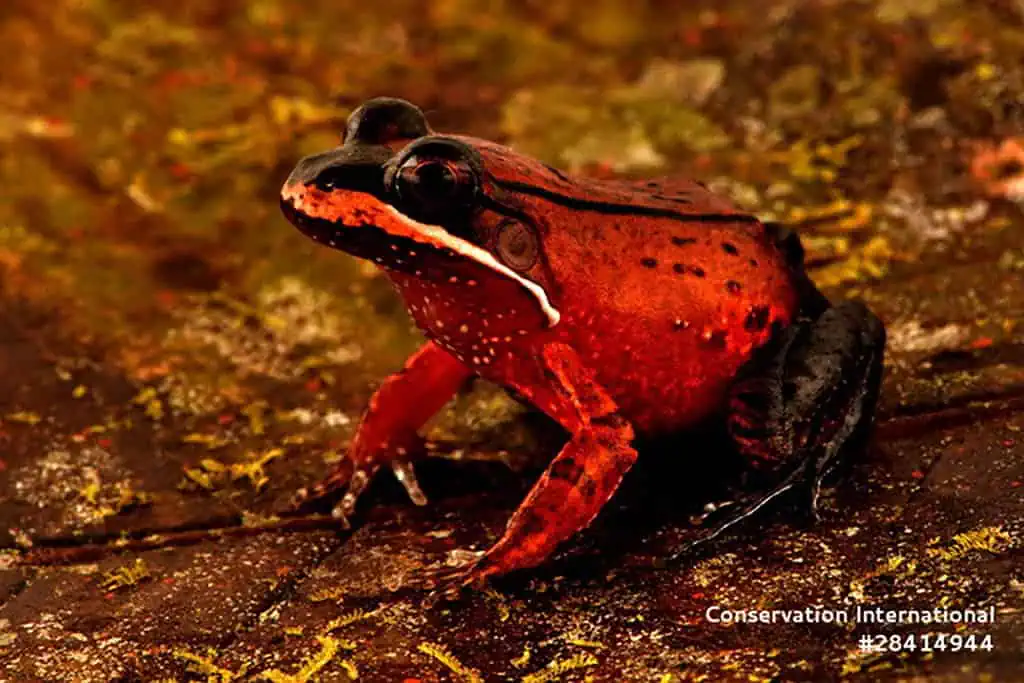
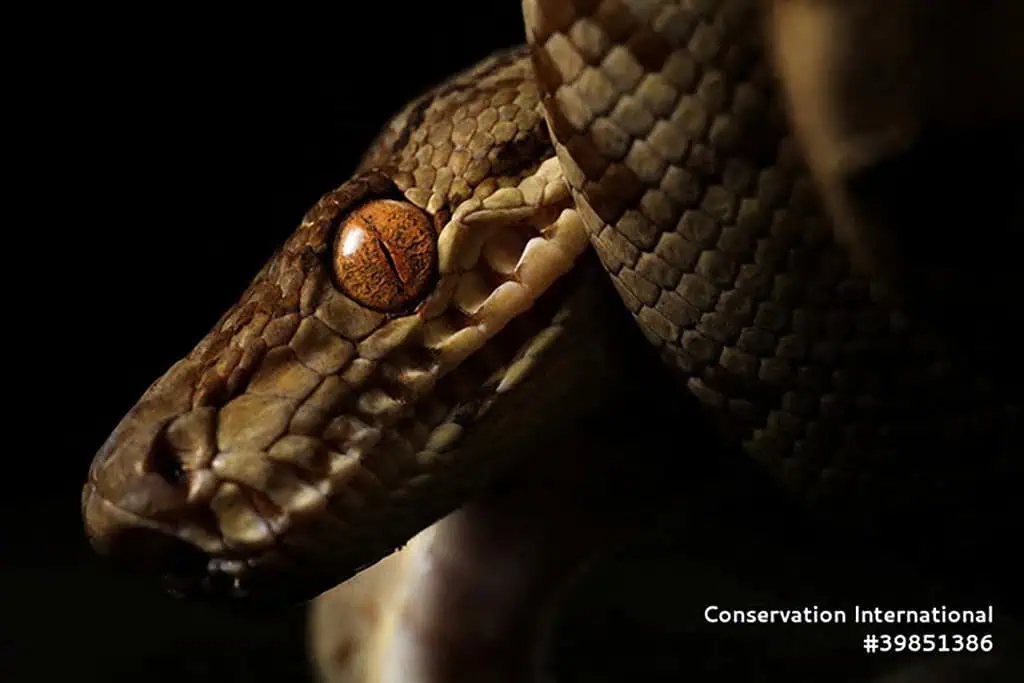
A Loreto White-lipped Frog (Leptodactylus rhodomystax) specimen, observed during an expedition to the Peruvian region of Alto Mayo, is pictured, Jun 19, 2022. Conservation International/photo by Trond Larsen/Handout via REUTERSAn specimen of the Amazon tree boa (Corallus hortulana), an arboreal boa species observed during an expedition to the Peruvian region of Alto Mayo, is pictured, July 5, 2022. Conservation International/photo by Marlon Dag/Handout via REUTERSA ‘blob-headed’ fish (Chaetostoma sp.) specimen, observed during an expedition to the Peruvian region of Alto Mayo, is pictured, Jun 13, 2022. Conservation International/photo by Robinson Olivera/Handout via REUTERSA specimen of one of the 45 bat species documented on the scientific expedition in the Alto Mayo landscape of Peru is pictured, Jul 9, 2022. Conservation International/photo by Marlon Dag/Handout via REUTERSA specimen of spiny mouse (Scolomys sp.), a species discovered on a Conservation International Rapid Assessment expedition into the Alto Mayo Landscape in Peru, is pictured, June 16, 2022. Conservation International/photo by Ronald Diaz/Handout via REUTERSA rufous-crested coquette (Lophornis delattrei) specimen, of a hummingbird species observed during an expedition to the Peruvian region of Alto Mayo, flies, Jun 27, 2022. Conservation International/photo by Marlon Dag/Handout via REUTERSAn specimen of an arboreal opossum species, observed during an expedition to the Peruvian region of Alto Mayo, is seen on a branch, June 10, 2022. Conservation International/photo by Marlon Dag/Handout via REUTERSA clearwing butterfly (Oleria sp.) specimen, from one of the 218 species of butterflies observed during an expedition to the Peruvian region of Alto Mayo, is pictured, June 8, 2022. Conservation International/photo by Marlon Dag/Handout via REUTERSA bristlenose catfish (Ancistrus sp.) specimen, of a new species that was discovered through a Conservation International Rapid Assessment expedition into the Alto Mayo Landscape in Peru, is pictured, June 11, 2022. Conservation International/photo by Robinson Olivera/Handout via REUTERS
An “amphibious mouse” with partially webbed feet that eats aquatic insects was among 27 new species discovered during a 2022 expedition to Peru’s Amazon, according to Conservation International.
Scientists also discovered a spiny mouse, a squirrel, eight types of fish, three amphibians and 10 types of butterflies, Trond Larsen, head of Conservation International’s Rapid Assessment Program, told Reuters this week.
He added that another 48 species found by investigators were potentially new, but needed further study.
The new species were found in Alto Mayo, a protected area with several ecosystems, Indigenous territories and villages.
“Discovering so many new species of mammals and vertebrates is really incredible, especially in such a human-influenced landscape as Alto Mayo,” Larsen said.
The expedition between June and July 2022 was made up of 13 scientists plus local technicians and members of Indigenous groups.
“It was really fantastic to work so closely with the Awajun people. They have extensive traditional knowledge about the forests, animals and plants they live side-by-side with,” Larsen said.
Among the new species, Larsen highlighted the spiny mouse that has stiff fur, the amphibious mouse, and a dwarf squirrel that measures 14 cm (5.5 in).
“(The squirrel) fits so easily in the palm of your hand. Adorable and beautiful chestnut-brown color, very fast,” Larsen said. “It jumps quickly and hides in the trees.”
Another favorite discovery was the blob-headed fish, a type of armored catfish, he said.
A total of 2,046 species were recorded during the 38-day expedition using camera traps, bioacoustic sensors and DNA sampling. Among them, 49 were classified as threatened, including the yellow-tailed woolly monkey and the tree monkey.
Larsen said the discoveries reinforced the need to protect the area.
“Unless steps are taken now to safeguard these sites and help restore parts of the landscape … there’s a strong chance they won’t persist in the long term,” Larsen said.
Editor’s Note:Report by Carlos Valdez and Marco Aquino; Editing by Alexander Villegas and Rosalba O’Brien
Category Sponsor
REUTERS NEWS SERVICE
Through a content partnership the Digital Free Press publishing Science & Technology reporting from the International News Service: Thomson Reuters