Staff Reports | Community Updates
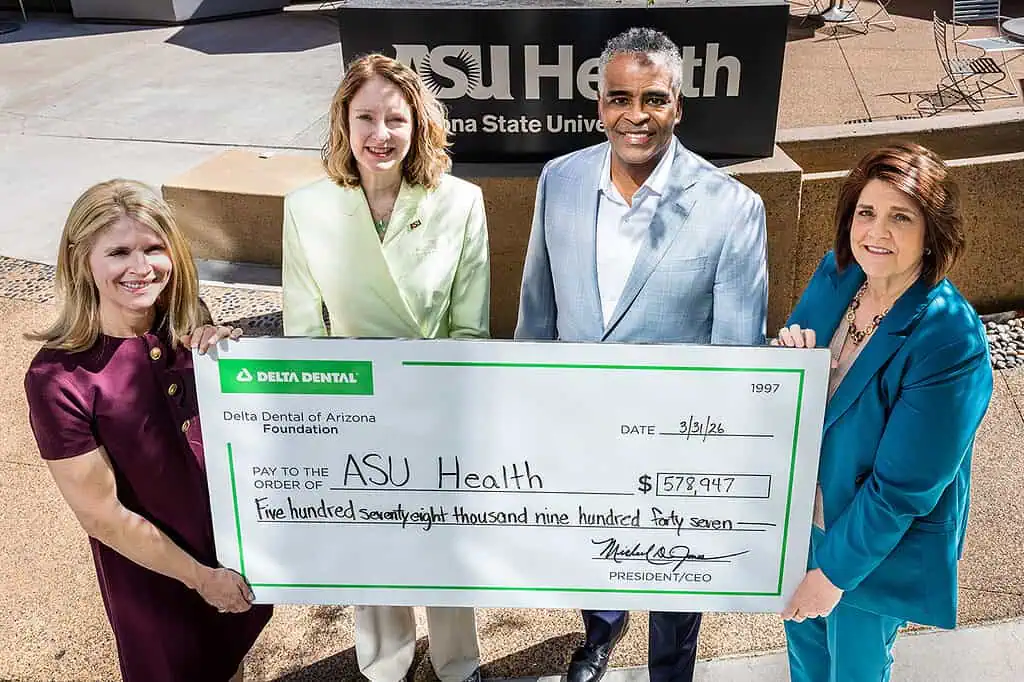
Arizona State University and Delta Dental of Arizona are partnering to create the Student-centered Medical Instruction and Learning in Oral Health powered by Artificial Intelligence program, known as SMILE-AI, at the Arizona State University John Shufeldt School of Medicine and Medical Engineering.
The initiative, supported by a $578,947 investment from the Delta Dental of Arizona Foundation, will integrate oral health education into medical school training and is expected to launch in the 2026-2027 academic year beginning in August, according to a press release.
“Medical-Dental Integration is increasingly recognized as a critical driver of improved health outcomes, including those in need of chronic disease management and those facing barriers to care,” Phoenix-based Delta Dental of Arizona President and CEO Michael Jones said.
“By integrating oral health curriculum into medical education through SMILE-AI, future physicians will be better equipped to address health disparities, understand the connection between oral health and overall health, and ultimately improve the health and wellness of their patients and communities.”
The SMILE-AI program embeds oral health curricula into the medical school experience and introduces augmented intelligence oral health patient avatar cases for first- and second-year medical students. The cases are designed to support clinical reasoning and provide context for how oral health connects to systemic conditions.
“The Delta Dental of Arizona Foundation is proud to support innovative programs like SMILE-AI that leverage science, data and technology to improve access to care and advance whole-person health,” Delta Dental of Arizona Foundation Executive Director Barb Kozuh said. “This investment reflects our commitment to ensuring that future healthcare providers are prepared to deliver more integrated, equitable care.”
Arizona State University and Delta Dental of Arizona are working with Harvard Medical School’s Center for Integration of Primary Care and Oral Health to develop the curriculum. The program will focus on team-based care and provide students with foundational knowledge to address oral health as part of overall wellness.
“Integrating oral health into medical education is essential to preparing the next generation of physicians to deliver comprehensive, patient-centered care,” Sarah Hollingsworth Lisanby, MD, DLFAPA, founding dean of the Shufeldt School, said. “Through SMILE-AI, we are creating an innovative, interdisciplinary learning environment that reflects how care should be delivered in the real world. This program will empower our students to better understand, prevent and treat conditions that impact both oral and systemic health.”
The program will be led by Kristen Will, Ph.D., associate dean and clinical professor at the Shufeldt School.
“SMILE-AI is designed to give medical students both the knowledge and practical skills needed to incorporate oral health into everyday clinical practice,” Dr. Will said. “By utilizing augmented intelligence and patient avatar cases, we are creating a dynamic learning experience that strengthens clinical decision-making and reinforces the importance of collaboration across disciplines. Our goal is to ensure graduates are prepared to deliver team-based care that improves outcomes for patients across diverse populations.”
Program organizers estimate that graduates will impact up to 72,000 patients per class each year.
The SMILE-AI program is part of Delta Dental of Arizona’s broader efforts to support health initiatives across the state, including partnerships with Arizona PBS, the University of Arizona College of Medicine–Phoenix Oral Health in Medicine Initiative, St. Vincent de Paul, Phoenix Children’s and the Banner Health Foundation.