By Rick Murray | Thoughts on Innovation
Arizona has a dangerous driving problem.
One person dies on our roads every 6 hours and 42 minutes. Our state ranks among the worst in the country for red-light crash deaths, with nearly 1 in 5 fatal crashes involving a driver running a red. And in 2023, Arizona recorded 17.5 traffic deaths per 100,000 people — far above the national average of 12.2.
Phoenix Got It Right
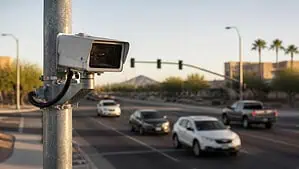
The City of Phoenix’s recent decision to bring back traffic enforcement cameras was the right call. Earlier this month, the City Council voted 7-1 to approve a five-year, $12 million contract with a Mesa-based company to install red-light and speed cameras. The new system — the city’s first since 2019, when a previous long-running program expired — is expected to be up and running by early 2026.
Phoenix joins other Arizona cities using this technology. Tempe recently reintroduced red-light cameras, and Scottsdale, Mesa, and Goodyear already have them.
What I See Every Day
As CEO of the Arizona Chapter National Safety Council, I’m committed to reducing preventable injuries and deaths. Our team partners with the Arizona Motor Vehicle Division to deliver driver education programs for people cited in traffic violations. The recidivism for those who have taken a defensive driving class is less than 4%, so we know that driver education programs work!
Distracted driving is often to blame. A glance at a phone or a rushed decision at an intersection is all it takes. Cameras can contribute to saving lives by deterring this type of behavior.
The Solid Case for Cameras
Traffic enforcement cameras work. A University of Arizona study found that red-light cameras in Phoenix led to a 28% drop in deaths and injuries. In Scottsdale, speed-related crashes went down by 65% after cameras were added. These systems also save money by reducing property damage, medical costs, and lost time at work.
Cameras help fill a gap that law enforcement simply can’t cover on its own. Phoenix has only 28 motor officers for more than 5,000 miles of road. Cameras don’t replace police, but they allow police officers to focus on serious crimes instead of routine traffic stops — which can be dangerous for both drivers and officers. And cameras are on duty day and night, every day of the year.
The National Safety Council supports automated enforcement programs that follow best practices, including clear signs, regular calibration, and strong limits on how footage is used.
The Bottom Line
Phoenix made the right call by bringing traffic cameras back. It’s a data-driven move that prioritizes public safety. And if one extra set of eyes at an intersection prevents even a single crash, that’s a choice worth making.
Editor’s Note: Rick Murray is president and CEO, Arizona Chapter National Safety Council