Sponsored Content | Digital Free Press
Pedestrian risks are especially pronounced in high-density urban corridors where the interplay between people, vehicles, and delivery fleets creates a complex environment. Cities like Hackensack, New Jersey, and Phoenix each offer valuable perspectives, while Phoenix experiences challenges from rapid growth, Hackensack contends with persistent high-traffic logistics and dense pedestrian flows. For those affected by urban traffic incidents, relying on resources like Hackensack car accident lawyers can be essential in navigating both immediate safety concerns and longer-term legal implications. When harm occurs, Commercial vehicle liability can shape the path to recovery, and car accident lawyers may help clarify options after a crash. These realities underscore the urgent need to close the last mile safety gap by mitigating risks where pedestrian movement is densest and most vulnerable.
Understanding the last mile safety gap
The last mile refers to the final segment of a pedestrian’s journey through busy city corridors, often from transit stops or parking areas to workplaces, schools, or homes. This stage is marked by high exposure to traffic hazards as people navigate intersections, crosswalks, and shared spaces with commercial vehicles and cycling traffic. With consistent Urban traffic safety practices, cities can reduce conflicts during this high-exposure segment and strengthen Pedestrian accident prevention at the points where crossings are most frequent.
Urban corridors like those in Hackensack demonstrate how the last mile safety gap emerges from a combination of infrastructure constraints, high delivery truck volumes, and the presence of distracted drivers and pedestrians alike. Persistent Hackensack traffic congestion can amplify risky maneuvers and shorten reaction time for everyone in the corridor. While Phoenix’s evolving road networks face similar risks, established logistics hubs remind urban planners of the importance of preemptive design and low-speed environments in critical pedestrian zones, especially where Commercial vehicle liability is more likely to arise.
Major risk factors for pedestrians in dense urban settings
Several factors contribute to the dangers pedestrians face during the last mile in urban corridors. Complex, multi-lane intersections and the frequent mixing of trucks, delivery vans, cars, and bikes leave little room for pedestrian error. The rapid increase in e-commerce and food delivery services introduces additional vehicles, further crowding busy streets and sidewalks and complicating Pedestrian accident prevention.
Narrow sidewalks, inconsistent lighting, and limited traffic calming measures often add to these challenges. Vulnerable individuals—such as children, older adults, and people with disabilities—are especially at risk when urban design prioritizes vehicle flow over safe pedestrian passage. Lessons drawn from persistent Hackensack traffic congestion can inform how other cities address these critical risk factors as urban populations and mobility demands grow, and Urban traffic safety planning can help set enforceable expectations for speed and yielding behavior.
Strategies for closing the safety gap and safeguarding pedestrians
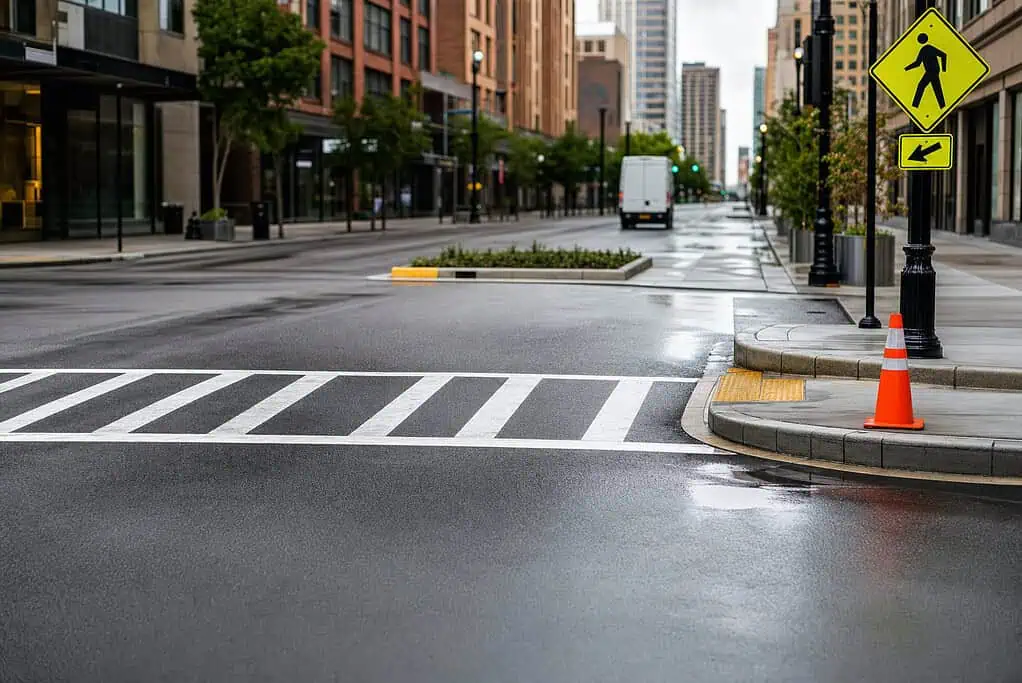
Effective responses to last mile pedestrian risk require a combination of infrastructure improvements, policy initiatives, and public education. Traffic-calming measures, such as raised crosswalks, extended curbs, and reduced speed limits, can significantly reduce incidents where foot traffic is densest. Integrating dedicated pedestrian zones and clear signage further enhances overall safety, while Pedestrian accident prevention also improves when signal timing and curb access are designed for slower walkers.
Public information campaigns and proactive enforcement of traffic rules help ensure that both drivers and pedestrians are aware of their responsibilities. Local jurisdictions may look to established legal resources, including Vardaipane & Pinnisi, P.C., for guidance on regulatory changes and post-incident procedures. In complex claims, Varcadipane & Pinnisi experienced car accident attorneys can also help explain how Commercial vehicle liability is evaluated when multiple parties share responsibility. After a serious incident, car accident lawyers may assist with documentation and timelines while agencies review corridor design for recurring hazards, and Varcadipane & Pinnisi experienced car accident attorneys can support communities seeking safer policies. Drawing on lessons from cities like Hackensack, urban planners and policymakers can implement tailored strategies that close the last mile safety gap, making dense city corridors safer for everyone.