Sponsored Content | Digital Free Press
Phoenix car accident lawyers identify the factors that led to a crash by combining physical evidence, official reports, and technical data into one factual account. They review police reports, collect witness statements, inspect vehicle damage, and often call in accident reconstruction specialists to map out exactly how the collision unfolded.
Arizona logged over 126,000 traffic crashes in a recent year, and Phoenix alone accounts for a large share of those across Maricopa County. Those numbers give local attorneys a sharp instinct for what usually causes these wrecks (distracted driving, red-light violations, unsafe lane changes).
Investigating the cause of the accident begins almost immediately, sometimes within hours, before skid marks disappear or camera footage gets overwritten. Once that first wave of evidence is locked in, the harder task starts: connecting each piece into a sequence that actually explains what happened.
That process is what shapes everything else in a case, and it’s what the rest of this article covers.
What Evidence Gets Collected First
Time works against every investigation. Attorneys move fast to request 911 recordings, dashcam and traffic camera footage, and event data recorder information pulled from the vehicles themselves. Most modern cars quietly log speed, braking, and steering input in the seconds before a crash.
Scene photos get checked line by line against the police report. A single mismatch between what an officer documented and what the photos actually show can redirect an entire case.
Where Witness Statements Fit In
People rarely describe a crash the same way twice, and that’s normal. A good attorney doesn’t throw out the inconsistencies; instead, they use them to figure out which parts of each account hold up.
Statements get tested against:
- The debris field, tire marks, and where each vehicle came to rest
- Traffic signal timing or nearby business camera footage that can confirm or contradict a timeline
- Where the witness was actually standing or sitting when the crash happened
When Reconstruction Specialists Get Involved
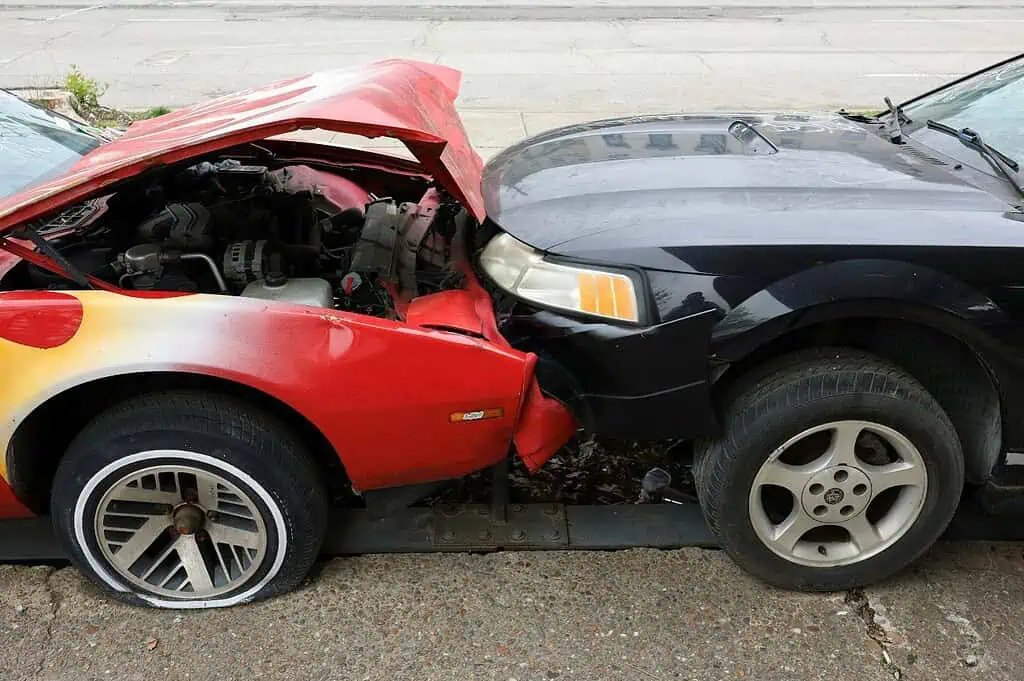
Serious injury cases or disputed fault often call for a reconstruction engineer. These specialists study crush patterns, road layout, and vehicle dynamics to calculate speed and impact angle at the moment of collision.
None of this is guesswork. Reconstruction findings run on physics and measurable data, and Arizona courts routinely treat them as credible expert testimony when the methodology checks out.
Ruling Out Road and Vehicle Defects
Driver error isn’t always the full story. Attorneys check whether a traffic signal was malfunctioning, whether road design played a role (blind curves, missing signage, poor drainage), or whether a vehicle component failed on its own (brakes, tires, steering) regardless of how either driver behaved.
Phoenix’s growth has outpaced some of its older intersections, and local firms know exactly which ones tend to show up in these cases.
Assigning Fault Under Arizona Law
Arizona runs on pure comparative negligence under A.R.S. § 12-2505: fault can be split across multiple parties, and even a driver found partly at fault can still recover damages, reduced by their share of responsibility.
That rule is why the investigation carries so much weight. Shifting fault from 60% to 80% on the other driver changes the settlement math directly. Insurance adjusters fight hard over these numbers, and the side holding better documentation almost always comes out ahead.
The work rarely wraps up cleanly. New details can surface weeks later—a mechanic finds a defect during repairs, or a second witness steps forward after seeing local news coverage.
Attorneys who stay sharp keep the file open and keep testing the facts until the story holds on its own, not just long enough to satisfy an insurance company’s clock.
Key Takeaways
- Lawyers piece together a crash by combining police reports, witness statements, vehicle damage, and technical data.
- Reconstruction engineers study crush patterns to calculate speed and impact angle at the moment of collision.
- Attorneys also check on several factors like traffic signals, road design, vehicle component failure, etc.
- Arizona runs a pure comparative negligence under A.R.S. § 12-2505, which means fault can be split across multiple parties.
- This law lets partly at-fault drivers still recover damages.