Sponsored Content | Digital Free Press
Rogers is a place where people spend their days working, commuting, caring for family, and handling ordinary responsibilities that can be suddenly disrupted by an unexpected injury. Whether the incident occurs on the road, at work, or somewhere in the community, the consequences may continue long after the initial event. As treatment progresses and expenses accumulate, it can become difficult to remember every detail or explain exactly how the injury has changed daily life. That is where careful documentation becomes more than simple paperwork.
A well-organized record can preserve details while they are fresh and help show the progression of symptoms, practical difficulties, and financial consequences over time. For someone seeking legal guidance, a personal injury attorney in Rogers can also use those records to better understand the circumstances and evaluate the available options. Knowing what to document and why it matters can help injured people create a clearer account of their experience while avoiding gaps that may later make important aspects of the injury harder to establish.
A Clear Record Protects Memory
Pain, medication, and stress can affect recall after an injury. A dated account prepared soon afterward should identify the location, time, weather, people present, and visible conditions. It can also describe pain, restricted movement, confusion, or other immediate symptoms. Factual observations carry more weight than speculation. Separate personal impressions from details directly witnessed.
Medical Notes Show Progress
Clinical records document diagnoses, examinations, testing, medication, referrals, and treatment plans. Follow-up visits may show improvement, persistent symptoms, or new complications. Missed appointments can raise questions, so scheduling problems should be reported promptly. Discharge instructions and therapy recommendations also explain the care required during healing. Patients should request clarification whenever a direction seems unclear.
Symptoms Should Be Tracked
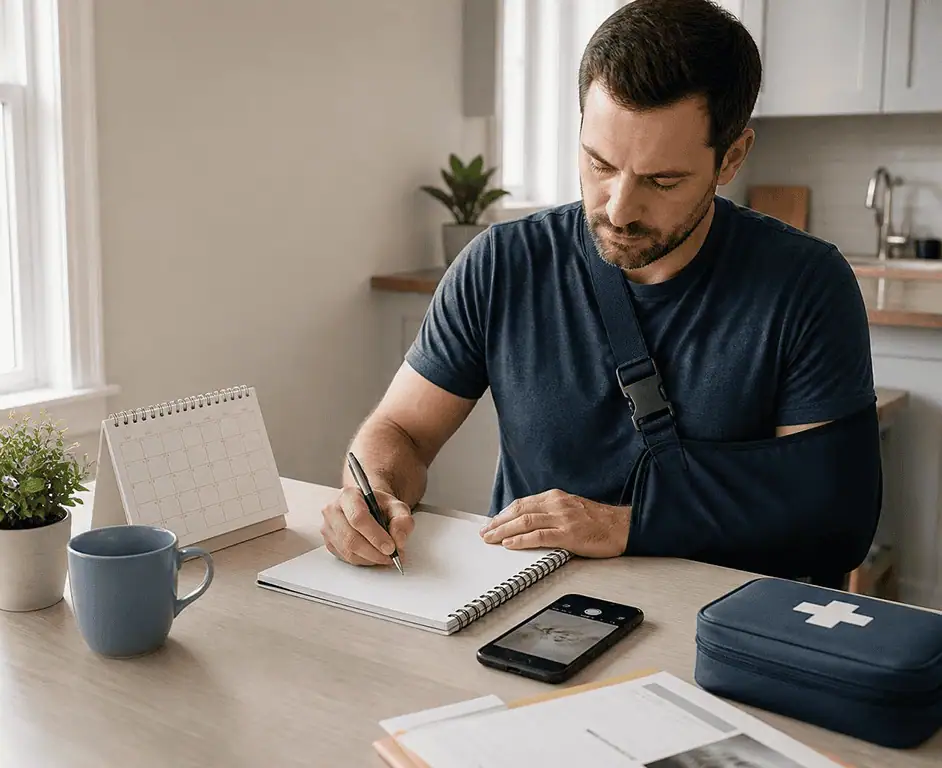
A daily journal may capture details absent from a short appointment note. Useful entries include pain intensity, sleep interruptions, headaches, numbness, weakness, anxiety, and problems completing routine tasks. Each record should identify the activity involved and how long the symptom lasted. Consistent entries can reveal patterns across several days, giving clinicians a clearer picture of recovery.
Photos Add Visible Proof
Images can preserve vehicle damage, unsafe flooring, bruising, swelling, torn clothing, or damaged equipment. Wide photographs establish setting, while close images show specific conditions. Each file should include its date, location, and source. Original images should remain unchanged. Filters, cropping, and edits can invite questions about whether the picture accurately reflects the condition at the time.
Work Records Measure Losses
Employment records help demonstrate financial harm linked to an injury. Pay statements, schedules, tax documents, leave notices, and supervisor messages may show missed hours or reduced duties. A separate expense list can track medical travel, childcare, household assistance, and unpaid time. Receipts should display dates, amounts, and a brief purpose. Small costs can add up quickly over weeks.
Witnesses Strengthen the Timeline
Collect witness names and contact details should be collected as soon as circumstances allow. Their observations might confirm traffic signals, hazardous conditions, statements, visible injuries, or changes in conduct after the event. Recollections often become less precise with time. A short note should identify each person’s position and the facts they appeared to observe.
Digital Files Need Care
Copy electronic records to at least two secure locations. Cloud storage, an external drive, or a protected email folder can prevent accidental loss. File names should identify the date and document type. Keep text messages, emails, appointment notices, and insurer letters complete. Screenshots may help, but original messages provide stronger context and preserve surrounding details.
Insurance Communications Require Attention
Claims representatives may request statements, records, authorizations, or proof of expenses. Review each request carefully before responding. Retain copies of submitted materials. Log conversations with the representative’s name, date, time, and subject. A written history reduces confusion about deadlines, missing documents, and prior statements.
Privacy Helps Preserve Credibility
Social media posts may create an incomplete picture of physical ability or emotional health. Photographs, comments, check-ins, and activity updates can be viewed without context. Injured people should avoid posting about symptoms, treatment, finances, or the incident. Privacy settings offer limited protection. Restricting public discussion can reduce misunderstandings and prevent unnecessary disputes.
A Simple Documentation Routine
A manageable routine makes recordkeeping practical. After each appointment, the injured person can save bills, update symptoms, record missed work, and note new instructions. A weekly review may reveal missing receipts or unanswered messages. Records should remain factual, dated, and organized. Avoid guesswork, especially for costs, timelines, medication use, and medical details.
Conclusion
Documentation gives an injury claim a reliable foundation. Medical records describe physical effects, photographs preserve conditions, and financial documents show measurable losses. Witness information can support important events, while communication logs explain how a claim developed. Personal notes also help clinicians assess recovery between visits. Gathering accurate material early allows injured people to present a clearer account of harm and protect access to appropriate care and compensation.