By Michelle Talsma Everson | Digital Free Press
For many Arizona families, the question is no longer whether school has to happen inside a traditional classroom. It is whether a different model can offer students more flexibility without losing structure, connection or academic momentum.
Novatio and Unbound Academy are among Arizona virtual schools using artificial intelligence-supported academics and project-based learning to give students more flexibility while keeping teacher guidance at the center of the school day.
The schools serve different student groups. Novatio is a private virtual school for students in grades 2-8, with tuition covered through Arizona’s Empowerment Scholarship Account program. Unbound Academy is a tuition-free virtual public charter school serving students in grades 4-8 statewide.
A different structure for the school day
At both schools, students complete focused academic work before moving into project-based learning, enrichment activities and teacher-led collaboration. School leaders say the goal is to use technology for routine academic support while preserving more time for teachers to coach students, ask deeper questions and help them apply what they are learning. Students who demonstrate mastery can move ahead, while those who need more support can receive targeted help without waiting for a formal classroom reset.
Midyear academic data reported by both schools reflects that model, school officials said. According to the schools, fall-to-winter results from nationally normed NWEA MAP assessments show Unbound Academy students achieved 2.8 times the expected midyear growth compared with national norms, while Novatio students achieved 4.5 times the expected midyear growth. For the analysis, NWEA’s annual growth targets were divided in half to determine expected progress by winter.
“Our model is built around daily personalization,” said Michael Goto, Head of School at Unbound Academy. “When students are learning at their exact level and pace every single day, growth compounds quickly.”
Novatio has also earned Cognia Accreditation, a designation that places the school within a global network of more than 40,000 accredited institutions. Cognia evaluates schools in areas including instruction, leadership, resource alignment and student outcomes.
Hands-on learning beyond the screen
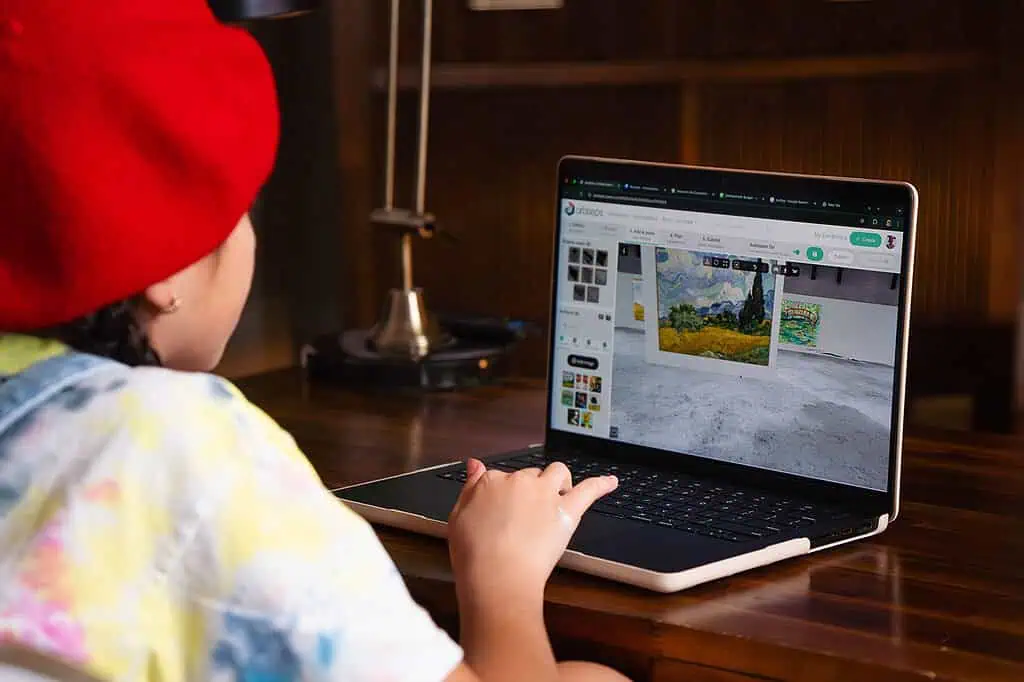
At Novatio, project-based learning includes programs such as The Artist Project, where students study an artist and create original work; Level Up, a 30-day habit and well-being challenge based on Yale’s Science of Well-Being; Game On, where students design video games using Scratch; and Wealth Builders, a financial literacy simulation focused on earning, saving, investing and spending.
“Students learn best when they’re actively building something, not just absorbing information,” said Karissa Ham, Head of School at Novatio. “Our teachers play a critical role in guiding that process, helping students think deeper, stay accountable and turn their ideas into something real.”
Unbound Academy follows a similar structure, combining AI-personalized academics with live teacher instruction and enrichment activities. Its programs include Page Turners, a reading and discussion experience; The Summit, a Model U.N.-inspired challenge focused on global issues and structured argument; The Studio, where students work on independent passion projects; Game On, where students create video games; and Grand Masters, a chess-based program focused on strategy and perseverance.
Goto said the school measures success through both academic progress and student relationships.
“Our teachers’ success is not only measured by the positive relationships built with our students each day, but academically where over half of Unbound students are outperforming their peers nationwide, according to our last benchmark,” Goto said.
Summer programs focus on creativity and connection
This summer, Novatio and Unbound Academy are offering free June workshops and social sessions for homeschooled and virtual school students in grades 4-8. The live Zoom sessions include Create Your Own Story at 3 p.m. Tuesdays, Build Your Own Video Game at 9 a.m. Thursdays and Meet Other Virtual Schoolers at noon Wednesdays.
In Create Your Own Story, students use AI to create characters, build a simple story and leave with a finished 10-page illustrated storybook. In Build Your Own Video Game, students create a playable game in Scratch in one hour.
The Wednesday social session is aimed at a concern many families have about homeschool and virtual learning: how students make friends without a traditional classroom. Activities may include Blookets, scavenger hunts, get-to-know-you games and team-based challenges, including an Amazing Race-style competition.
School leaders say the sessions are designed to help students connect through small groups, collaboration and friendly competition while giving families a no-cost way to explore whether virtual learning is a fit.
Building real-world skills
The schools describe their project-based work as a way to build communication, creativity, financial literacy, problem-solving and resilience alongside traditional academics.
“Technology should give teachers more time to connect, not less,” Ham said. “When you remove repetitive tasks and let AI handle the mechanics, teachers can focus on what matters most, supporting students as they build confidence, skills and independence.”
School officials say the goal is not to replace teachers with technology. It is to use technology to create more room for the human parts of school: feedback, encouragement, creativity, collaboration and connection.
Editor’s Note: Michelle Talsma Everson is a communications expert working and living in the Valley of the Sun.