Sponsored Content | Digital Free Press
For ages, the American housing story was largely told through the lens of cities and suburbs. Jobs were usually available in metropolitan areas and commuting was shaped where people lived. Rural communities were often viewed as places to visit rather than places to move to.
Rural America is attracting a new generation of homebuyers who are looking for more space, access to nature, quieter surroundings and a stronger connection to their communities. Now you cannot conclude that people are abandoning cities, because they are not.
In fact, buyers are shifting towards rural housing, but more selectively. The places benefiting most tend to offer something beyond low housing density, which includes a lake, a mountain landscape, a charming downtown and a relatively short distance to employment centers.
According to the USDA’s Economic Research Service, the population of nonmetropolitan counties has increased every year since 2020. Migration is driving that growth further. Between 2020 and 2024, migration added an estimated 974,000 people to nonmetro populations.
Reasons why rural demand is rising
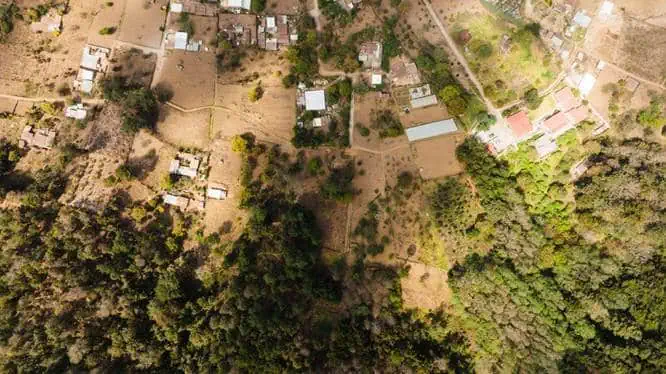
One of the biggest reasons why rural demand is rising is that people now think about space.
Urban properties are compact. Sometimes it is difficult to manage accommodation for a spacious home office, kitchen, and workshop. Gardens and outdoor entertaining areas become a luxury. Rural and small-town homes often offer more land and larger floor plans, making it possible to create spaces that serve several purposes. Remote and hybrid work have also reinforced that flexibility.
Lifestyle is another major factor because now people are opting for more outdoor activities like hiking, spending time on farms, forests, and open landscapes. There is also a growing interest in smaller communities with local identities.
Finally, a rural market can offer something very valuable in today’s housing scenario: choice. Buyers may be able to choose between a village house, a lake cottage, a farmhouse, an acreage property or a modern home surrounded by open land.
6 types of rural markets benefiting from the shift
The rural-but-connected market: Bloomfield, Wisconsin
Some of the most appealing rural markets are not remotely located. Instead, they offer the best of both worlds. You can have a quieter residential environment and access to larger communities and city convenience. Bloomfield, Wisconsin, has both.
It is located in the Lake Geneva area and offers a mix of residential properties, open land and lake-oriented living while remaining connected to one of southeastern Wisconsin’s best-known recreational destinations.
The current housing selection shows that variety. Buyers can find anything from updated cottages and traditional homes to properties with larger lots and renovation scope. In case you don’t get lost in the variety, check out Bloomfield home listings as a navigator.
The recreation-driven market: New Hampshire lake regions
Some rural housing markets are dominated by the landscape.
New Hampshire’s lake regions are one of them. Communities around Lake Winnipesaukee and the state’s other lakes attract buyers interested in boating, hiking, fishing, and seasonal living.
The charm extends beyond vacation homes. Some buyers are choosing to make these communities their primary residences, particularly as remote and hybrid work make location more flexible.
The small-town commuter market: Franklin, Tennessee
Another successful rural housing model sits just outside a major employment hub.
Franklin, Tennessee, dictates how buyers can seek a small-town atmosphere without giving up access to a major metropolitan economy. Located south of Nashville in Williamson County, Franklin combines historic architecture, strong community relations, newer developments and easy access to the broader Nashville job market.
This market is for buyers who want more room but do not want to compromise on the community feeling. A hybrid worker may be willing to live farther from an office if the trade-off is a larger home and a quieter neighborhood.
The acreage market: Bozeman, Montana
For buyers who dream of space in its most literal form, acreage properties offer an entirely different proposition.
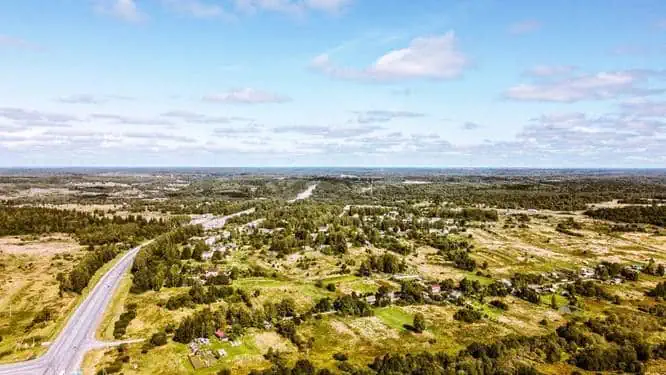
Bozeman and the surrounding Gallatin Valley have become prominent examples of the demand for homes with room to spread out. The landscape itself is part of the equation. Acreage buyers want land for gardens, animals, workshops, recreation or simply privacy, while still remaining within reach of a growing community.
It is a clear example of rural housing becoming a lifestyle purchase. The value of the property is not tied only to its square footage but to what the surrounding land makes possible.
The remote-work retreat: Bend, Oregon
Bend represents another version of the rural housing trend: the destination that can function as both a home and a lifestyle base.
Central Oregon’s outdoor environment has long called people interested in recreation like skiing, hiking, cycling, etc. Remote and hybrid work have made it easier for some households to consider communities like Bend without requiring a traditional daily commute to a major city.
The housing market has also encouraged local investment in different types of homes. The city itself supports a range of housing initiatives, including single-family, multifamily, mixed-income and rehabilitation projects.
The emerging rural main street: Hudson, New York
The final category is perhaps the most unique. In this town, the local center itself becomes part of the fascination.
Hudson, New York, brings together historic architecture, independent businesses, restaurants, galleries and the Hudson Valley landscape. So, there is an alternative to both large-city living and highly isolated rural properties.
Hudson’s growing popularity has also brought renewed attention to housing development and preservation. Current projects include efforts to expand housing availability while maintaining the city’s existing community fabric.
Some final words
The rise in rural housing demand is about people having more ways to define what they want from home. For one, it might mean a cottage near a lake in Wisconsin, while others crave a mountain property in New Hampshire. It can also mean choosing Bozeman or a historic house within walking distance of a small-town main street.
The strongest gains over recent years have tended to occur in places within an additional draw that it should be close to metropolitan areas, recreation, great landscapes or local communities. That makes the future of rural housing particularly interesting.