By Staff Reports | Community Updates
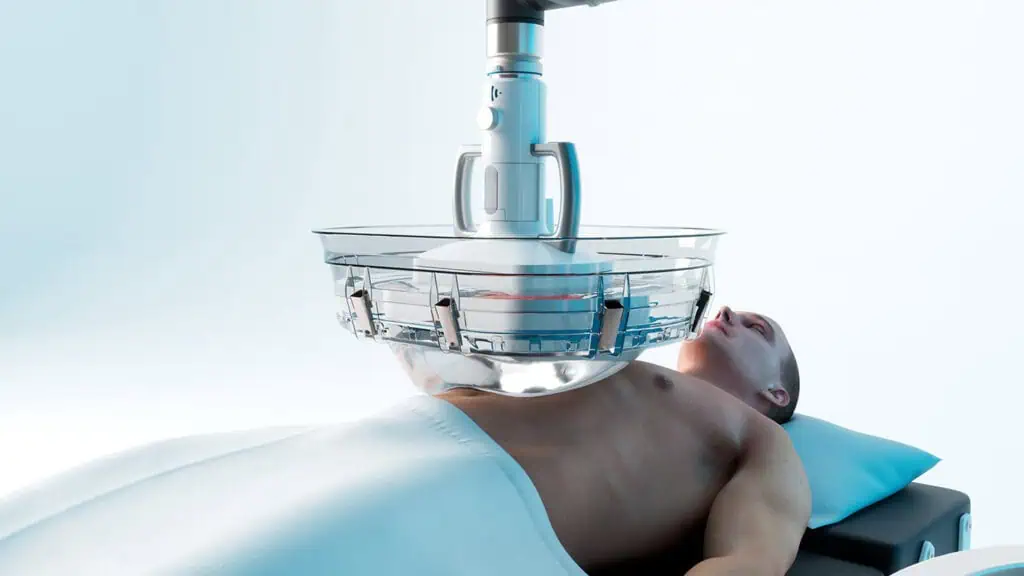
Banner MD Anderson Cancer Center is now offering a new, non-invasive technology to treat liver cancer: histotripsy, a procedure that uses focused ultrasound waves to locate and destroy cancerous tissue, according to a press release.
“Histotripsy treatment means no incisions, no needles, and no radiation,” said Dr. Michael Choti, division chief of surgical oncology at Banner MD Anderson. “We are thrilled to help these cancer patients recover more quickly and experience less pain than they would if they had to undergo surgery, thanks to this novel treatment,” Dr. Choti said.
Banner MD Anderson is the second facility in Arizona to offer histotripsy, which was approved by the U.S. Food and Drug Administration in 2023 for the treatment of liver tumors, according to the release.
The procedure uses a robotic platform to deliver sound waves through the skin and tissue, targeting the liver tumor directly. The waves create tiny bubbles—called cavitation—inside the tumor. These bubbles expand and burst, disintegrating the tumor without damaging surrounding tissue.
“Another advantage is that unlike other liver-directed therapies, histotripsy does not use heat or radiation, destroying the cancer without injuring normal tissues,” Dr. Choti said. “It can safely be delivered to liver tumors near major bile ducts, intestines or other vital structures.”
Histotripsy can treat primary liver cancers as well as metastatic tumors that have spread to the liver from other parts of the body. The procedure typically lasts between 10 and 90 minutes, depending on the size, location and number of tumors being treated. Most patients are able to return home the same day.
“For many patients, this treatment means avoiding surgery and hospital stays. Most importantly, it means patients are returning to their lives more quickly,” said Darren McCollem, chief executive officer of Banner Gateway Medical Center and Banner MD Anderson. “This is the kind of compassionate and innovative progress we strive for every day,” Mr. McCollem said.